
कथाStoryइकाई २ के बादafter Unit 2
उपवन मेंIn the garden
uvavaṇe
ध्यान देंNotice
द्वितीया बहुवचन मोरा प्रथमा बहुवचन जैसा दिखता है — क्रिया और अर्थ से पता चलता है कि कौन-सा है।द्वितीया बहुवचन मोरा looks like प्रथमा बहुवचन: the verb and the sense tell which is which.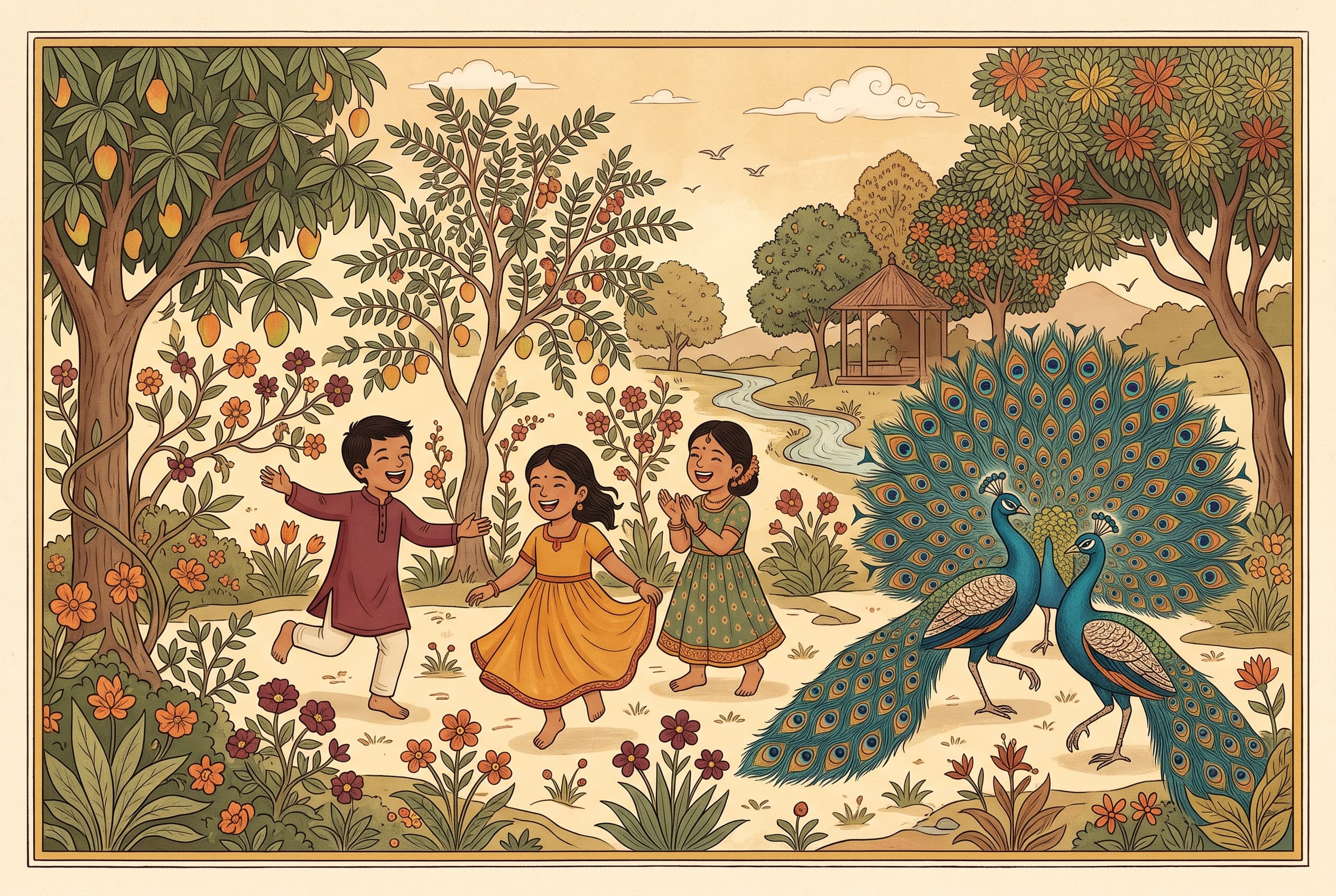
कथा पढ़ेंRead the story
किसी भी शब्द पर टैप करें — उसका अर्थ और रूप खुलेगा।Tap any word to see its meaning and form.
।
bālaā uvavaṇe khelanti
बालक उपवन में खेलते हैं।
The children play in the garden.
।
morā tattha ṇaccanti
मोर वहाँ नाचते हैं।
Peacocks dance there.
।
bālaā morā pāsanti
बालक मोरों को देखते हैं।
The children watch the peacocks.
।
amhe vi pāsāmo
हम भी देखते हैं।
We watch too.
।
te sayā hasanti
वे सदा हँसते हैं।
They are always laughing.
प्रश्नQuestions
कथा के आधार पर सही उत्तर चुनिए। हर सही उत्तर पर अंक मिलते हैं।Choose the right answer from the story. Every right answer earns XP.प्रश्न १Question 1
?
बालक कहाँ खेलते हैं?Where do the children play?प्रश्न २Question 2
?
कौन नाचते हैं?Who dance?प्रश्न ३Question 3
?
हम क्या करते हैं?What do we do?
क्रम से लगाइएPut the lines in order
पंक्तियाँ उलट-पुलट हो गई हैं। नीचे से एक-एक पंक्ति चुनकर कथा का सही क्रम बनाइए, फिर जाँचिए।The lines are mixed up. Pick them one by one from below to rebuild the story, then check.कीबोर्ड: Enter से लगाएँ, Alt + ↑ / ↓ से खिसकाएँ, Delete से हटाएँ।Keyboard: Enter places a line, Alt + ↑ / ↓ moves it, Delete takes it out.
आपका क्रमYour order
- 1: खाली · empty
- 2: खाली · empty
- 3: खाली · empty
- 4: खाली · empty
- 5: खाली · empty
बची हुई पंक्तियाँLines to place